The freight invoice turns up three weeks after the goods, and half of them have already shipped back out
Nobody disputes the number. The dispute is where it goes. The container cost what it cost, the duty was what it was, and the receipt it belongs to was closed a fortnight ago. So the freight lands in an expense account, the components keep the price on the purchase order, and the margin on everything that moved in between is wrong by an amount nobody can name. The same thing happens one level up: the kit was bought as a single line at a single price, arrived as fourteen parts, and the question of what each part cost was settled by whoever built the spreadsheet.
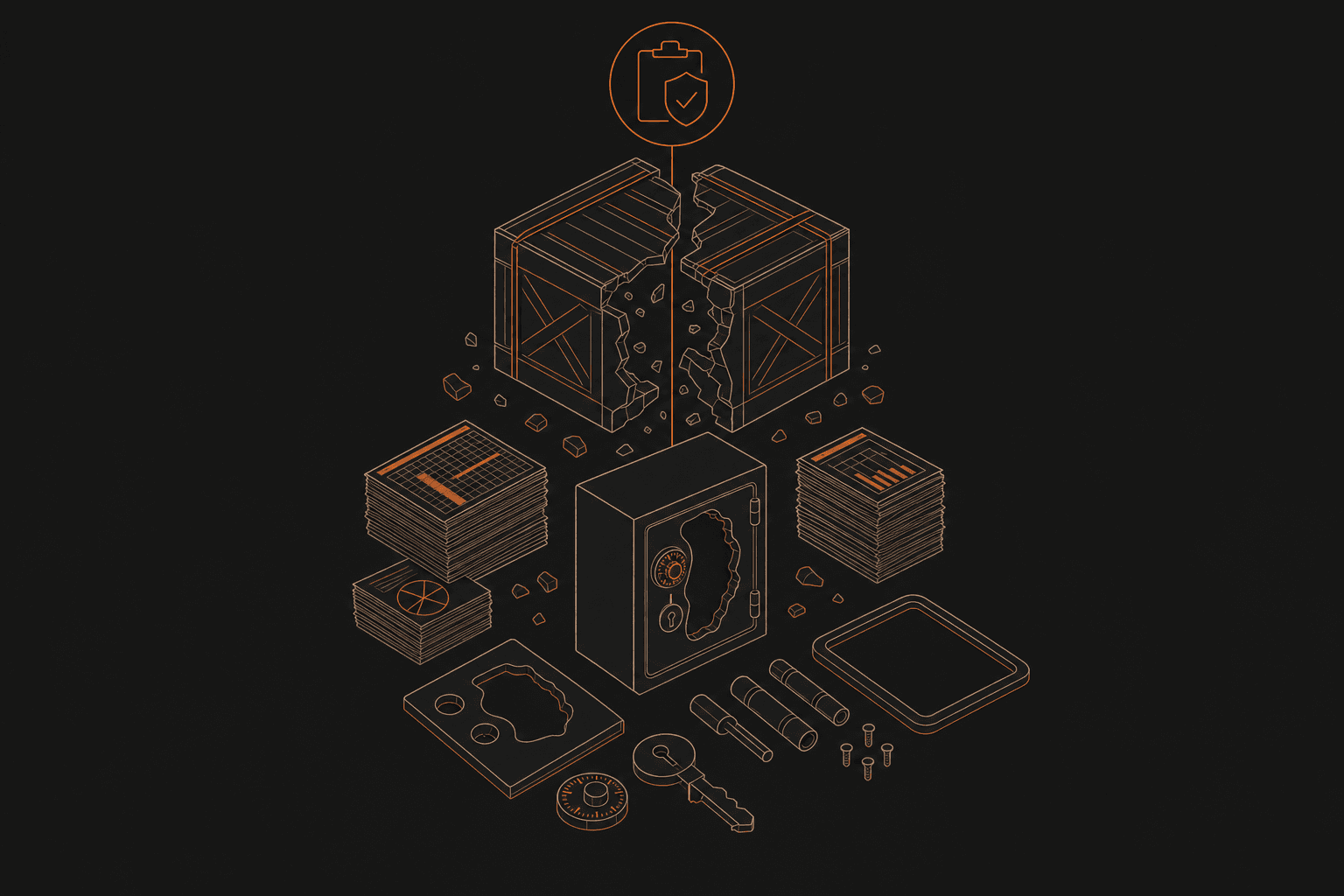
What you get with BOM sourcing and landed costs
Kits that are bought whole and received in pieces. A purchase line for a product with a kit bill of materials takes its received quantity from the component moves rather than from something typed in, and a cost-share percentage on each component line divides the kit price, the bill of materials will not save unless those shares total 100.
Freight and duty as product cost rather than as an expense. A landed cost applies to the transfers you choose and spreads across them equally, by quantity, by weight, by volume or by current cost, posting a journal entry and adjusting stock valuation. Where the amounts come off a vendor bill, the lines flagged as landed costs on that bill create the allocation directly.
And the allocation is prorated to what is left. On validation, each adjustment is scaled by the quantity still remaining on the valuation layer, lot by lot where the product is lot-valued, so goods already sold or consumed do not have cost added back onto them after the fact.
Demand writes the order. The buy route picks a vendor from the pricelist for the required quantity and date, and merges new demand into an existing draft order for the same vendor, buyer, operation type and currency instead of opening a second one. A purchase order will show you the manufacturing orders it is feeding.
All of it ships in Odoo Community, nothing to add here, no tier to reach, no per-user fee, and it runs on the system you own.
What is landed cost?
Landed cost is the total cost of getting a purchased item to the place it will be sold or consumed from, rather than the price on the vendor's invoice alone. The invoice price is one component; freight, insurance, customs duty, port and handling charges are the others, and they usually arrive as separate documents from separate parties, days or weeks after the goods. The reason the distinction matters is that inventory is valued at cost: if the additional charges sit in an expense account instead of on the goods, then the balance sheet understates the inventory and every margin calculated against those items is overstated by the same amount. Allocating landed cost is the act of moving those charges onto the receipts they belong to and choosing a basis for the split, equally across the items, by quantity, by weight, by volume, or in proportion to what each item already cost.
Why does freight left in an expense account distort margin rather than just moving it?
Because the two sides land in different periods and on different items. Freight posted to an expense account hits the profit and loss in the month the freight invoice is processed, while the goods it paid to move are sold across whatever months they happen to sell in. The month the container clears looks unusually expensive, the months after it look unusually profitable, and neither figure is about how the products actually performed. It also spreads the error evenly over everything, when the charge was not evenly earned: a shipment of one heavy, cheap item and one light, expensive one incurred most of its freight for the first and most of its value for the second. Putting the charge onto the receipt and choosing a split basis is what makes the per-item cost mean something, and it is the only version of the number a margin review can act on.
What should happen to a landed cost for goods that have already been sold?
It should be recognised as a cost of that period rather than added back onto inventory that no longer exists. This is the case landed-cost allocation gets wrong most often, because the natural implementation is to divide the charge across the receipt as though the receipt were still intact, which quietly re-values units that were shipped out weeks ago. The correct behaviour is to compare the quantity still remaining against the quantity originally received and to add only that proportion to the valuation, so the remainder falls where it belongs. Where the goods are tracked by lot, the same proration has to be done lot by lot, because "half the receipt is left" is not the same statement as "half of each lot is left". It is worth asking any ERP vendor which of these two behaviours their landed-cost allocation implements, because both are commonly described with the same sentence.
Does buying a kit require a manufacturing order?
No. A kit, a bill of materials whose type is "kit" rather than "manufacture this product", is never produced by a manufacturing order at all. It explodes into its component parts at the point it is used, which means it can be quoted, ordered and purchased as a single line while moving through the warehouse as individual items. On the purchasing side that has a useful consequence: the received quantity on the purchase line is derived from the component receipts rather than typed in, so a kit that arrives incomplete reports as a partially received line instead of as a whole one. The distinction between a kit and a manufactured assembly is a field on the bill of materials, not two different products, so the same structure can be reconsidered later without re-cataloguing anything.
How is a kit's purchase price divided across its components?
By a percentage held on each component line of the bill of materials. Each line carries a cost share, the shares are validated to total exactly 100 across the bill of materials, and a bill of materials whose shares do not add up will not save, which is the point, because a partially filled allocation is worse than none. Where no shares have been entered at all, the cost is divided evenly across the component lines that apply to the variant. This matters beyond tidiness: the component costs derived this way are what the inventory is valued at and what every downstream margin is measured against, so an allocation set once on the bill of materials replaces a judgement made repeatedly, and differently, by whoever happened to receive the shipment.